

Stain Removal Guide: What to Do in the First Ten Minutes, Stain by Stain
Most of the stains that reach our counters as “permanent” were removable an hour earlier. What set them was not the tea, the turmeric or the ink; it was hot water, hard rubbing and a hot iron applied with the best of intentions. This guide tells you what to do in the first ten minutes for every common stain in a Delhi household, what never to do, and when to stop and send the garment to us.
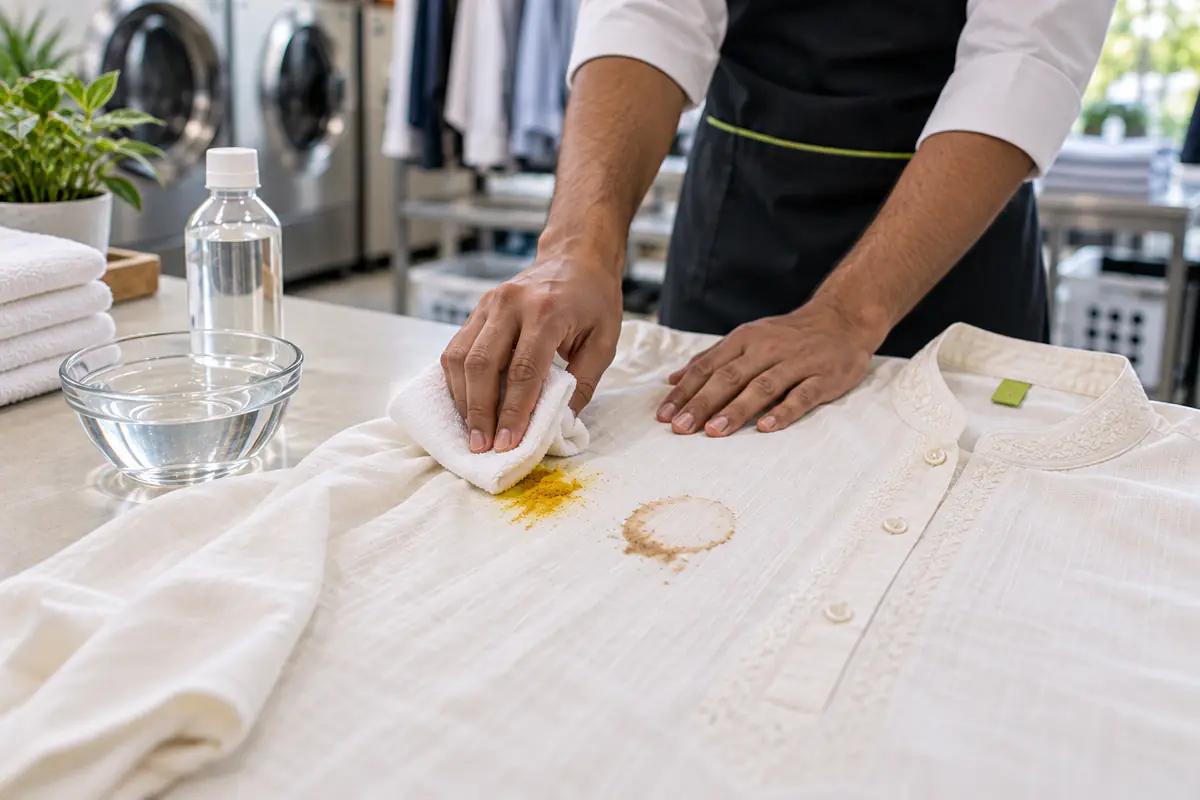
The four rules that save most garments
- Act now, not after dinner. A fresh stain sits on top of the fibre; an old one has bonded with it. Ten minutes matters more than any product.
- Blot, never rub. Press a clean white cloth or tissue on the mark to lift it out. Rubbing pushes it deeper, spreads it wider and roughens the surface so it shows even after the colour is gone.
- Cold water first, always. Heat cooks protein (blood, milk, egg, sweat) and sets dyes (turmeric, ink, Holi colour) permanently. Use cold or room-temperature water until the stain is gone, then wash as usual.
- No heat until it is gone. Do not iron, tumble dry or leave in the sun a garment with a stain still on it; if the mark survives the wash, it will survive the iron forever. And if the garment is silk, wool, viscose, lined or embroidered, stop at blotting and send it to us.
Why the first ten minutes matter
Every stain is one of four things: water-based (tea, cola, juice, mud), oil-based (ghee, curry oil, butter, lipstick, grease), protein (blood, milk, egg, sweat, ice cream) or a dye (turmeric, ink, mehendi, Holi colour, red wine). Fresh, each of them is sitting in the gaps between the threads and can be flushed out with the right liquid. Given time, three things happen. The stain dries and its solids lock into the fibre. It oxidises — a pale tea ring turns brown, a clear oil mark turns yellow — and the oxidised version is much harder to shift. And the first well-meaning treatment usually adds heat, which does more to fix a stain than anything the stain did on its own.
This is also why a cleaner can only promise so much on an old stain. Solvents and steam remove what is still a stain; they cannot undo a chemical change in the fibre, and a mark that has been through a hot wash, an iron and a month in the cupboard has usually changed the fibre. We will always try, and we will always tell you honestly at the counter what we think will come out.
What never to do
- Hot water on anything you are not sure about. It is the single biggest cause of permanent stains we see.
- A bar of soap on tea, coffee or wine. Ordinary soap can fix tannin stains; use liquid detergent instead.
- Chlorine bleach on colours, silk, wool or rust. It strips dye, weakens protein fibres and turns rust marks permanent.
- Ironing over a stain to hide it. It bakes it in.
- Kitchen chemistry on silk, wool or viscose. Vinegar, lemon, baking soda and hand sanitiser all have their uses on cotton; on delicate fabrics they leave rings, strip colour or eat the fibre. Blot, and send it.
- Waiting to see if it comes out in the wash. A stain that has been through a warm cycle and the dryer is set.
Stain by stain: first aid at home, and when to stop
The home treatments below are for washable cotton, linen, polyester and denim. Test any product on an inside seam first. For silk, wool, viscose, lined or embellished garments, do only the blotting step and send the piece to us with a note of what the stain is and how old it is.
| Stain | Type | First ten minutes (washable cotton) | Never | Send it if |
|---|---|---|---|---|
| Tea, coffee, chai | Tannin | Flush cold water through from the back of the fabric. Work liquid detergent into the mark, leave 10 minutes, wash cold. | Bar soap, hot water. | It has milk in it and has dried, or the garment is silk or wool. |
| Turmeric, haldi, curry | Dye carried in oil | Scrape off the solids, blot the oil. Liquid detergent or dish liquid worked in, cold rinse. On white cotton, dry in the sun: sunlight fades turmeric. | Hot water, rubbing, ironing. Expect a faint yellow to remain. | Any silk, any dark colour, anything from a haldi ceremony that is not plain cotton. |
| Ghee, oil, butter, grease | Oil | Blot, then cover with talc or cornflour for 15 minutes to draw the oil out. Brush off, dab dish liquid on the mark, wash in the warmest water the label allows. | Cold-only washing (oil needs warmth and detergent), plain water rinsing. | The oil has dried and yellowed, or the fabric is anything but sturdy cotton. |
| Ballpoint ink | Dye in oil | Put a folded tissue under the mark and dab, do not rub, with rubbing alcohol or a spirit-based hand sanitiser. Keep moving to a clean part of the tissue. Rinse cold, wash. | Hot water, hair spray, milk. | Gel or permanent ink, or the garment is silk, viscose or a suit; ink on a pocket lining needs a spotting board. |
| Blood | Protein | Cold water only, flushed from the back. For what remains, a paste of salt and cold water, or diluted hydrogen peroxide on whites. Wash cold. | Warm or hot water at any stage; it cooks the protein into the fibre. | It is dried and brown, or on anything you cannot put in cold water. |
| Sweat and deodorant yellowing | Protein plus aluminium residue | Soak in cold water with liquid detergent for an hour. Whites can take an oxygen bleach soak. Wash on the warmest setting the label allows. | Chlorine bleach (it turns the yellow darker). | The collar or underarm is stiff and shiny: that is months of build-up and needs professional treatment or premium laundry. |
| Cola, juice, red wine | Tannin and sugar | Blot, then flush cold water through from the back. Cover a wine stain in salt to draw it out while you fetch the detergent. Liquid detergent, cold wash. | Rubbing, bar soap, hot water. Sugar that dries invisibly turns brown when ironed. | The garment is silk, or the stain has dried. |
| Mud, monsoon splash | Water-based, with clay | Let it dry completely, then brush the dry mud off. Liquid detergent on what remains, cold wash. Treat it wet and you spread it. | Wiping it while wet. | The mud has left a grey tide mark on light cotton or is on suede, leather or a wool coat. |
| Mehendi, henna | Permanent dye | Blot and rinse cold immediately. Liquid detergent, cold wash, sun-dry. It fades over several washes; it rarely disappears. | Hot water, ironing. | It is on a wedding outfit. We can lighten it; nobody can promise to remove it. |
| Lipstick, foundation, kajal | Oil plus pigment | Scrape the surface. Dab dish liquid or liquid detergent into the mark from the back, leave 10 minutes, rinse cold, wash. | Water first (it spreads the oil), rubbing. | It is on a collar of a suit, a saree blouse or a dupatta: this is what a spotting board is for. |
| Chocolate, ice cream, milk | Protein and fat | Scrape, flush cold water from the back, liquid detergent, cold wash. | Warm water at the start. | It has dried on a woollen or a lined garment. |
| Rust | Iron oxide | Lemon juice and salt on the mark, laid in the sun for an hour, then rinsed and washed. Repeat once if needed. | Chlorine bleach, which makes rust permanent. | It is on silk, wool or anything coloured. |
| Candle wax, diya oil | Wax and oil | Put the garment in the freezer for an hour and snap the wax off. Lay blotting paper over the residue and press with a warm iron to lift it; this is the one stain where a warm iron helps. Treat the remaining oil mark as grease. | Scraping wet wax, hot iron directly on the cloth. | The candle was coloured, or the fabric is silk. |
| Holi colour | Dye, sometimes permanent | Rinse in cold water before it dries; do not let the garment sit. Liquid detergent, cold wash, repeat. Wear old clothes to play. | Hot water, sun-drying with the colour still on. | The colour is on anything you care about: some gulal is a permanent textile dye. |
| Paan, betel | Tannin and dye | Blot, flush cold from the back, liquid detergent. Expect a shadow. | Rubbing, hot water. | Almost always; it is one of the hardest stains to remove at home. |
Rubbing alcohol, oxygen bleach and hydrogen peroxide are all sold at chemists. Dish liquid is the best household grease cutter. Test every product on an inside seam first, and rinse it out completely before the garment goes in the machine.
The fabric decides how far you go
The table above assumes cotton. The same stain on a different fabric changes the answer entirely.
| Fabric | At home, you can | Because |
|---|---|---|
| Cotton, linen, denim | Everything in the table | Strong wet, takes warm water and most products; may fade slightly with repeated treatment. |
| Polyester, blends | Everything in the table, but oil is harder | Synthetic fibres hold on to oil; expect two rounds of dish liquid on a ghee mark. |
| Silk | Blot only | Water alone leaves a ring, most products strip the dye, and rubbing breaks the surface. Every silk stain is a dry cleaning job. |
| Wool, pashmina | Blot; cold water on a fresh water-based mark if the label allows | Heat, agitation and alkaline products felt or shrink the fibre. Send anything oily. |
| Viscose, rayon | Blot only | Loses strength when wet; a home treatment often leaves a rough patch worse than the stain. |
| Embroidered, zari, sequinned | Blot only | Water dulls zari and dissolves the glue under sequins. |
| Leather, suede, shoes, bags | Wipe a fresh spill; nothing else | Water stiffens leather and solvent strips it; leather, shoe and bag cleaning are separate processes with conditioning afterwards. |
| Carpets, sofa covers, curtains | Blot a fresh spill; scrape solids | Backing and lining trap moisture, so wet home treatment breeds mildew; carpet cleaning and curtain cleaning handle these whole. |
What professional stain removal actually is
A dry cleaning machine does not remove stains; the person at the spotting board before it does. Every garment that comes in with a mark is checked under a bright light, the stain is identified by type, and it is treated by hand with the reagent for that type: a solvent for oil and grease, a water-based spotter for tannins and sugars, an enzyme for protein, an oxidiser or reducer for dyes, and steam to flush each one out before the next. Only then does the garment go into the solvent wash, and it is checked again under the light before finishing. On a normal dry clean this is simply part of the job; it is why a good cleaner asks what the stain is and how old it is, and why we ask you to point marks out when the rider collects.
Help us help the garment. Tell the rider or the counter what the stain is, how old it is and what you have already tried. A blood stain treated with cold water and a blood stain that has been through a hot wash need opposite approaches, and knowing which one we are looking at saves the fabric a treatment it does not need.
Honesty is also part of the job. Some marks do not come out: bleach spots are missing dye, not a stain; ink that has been ironed; turmeric on silk that has been in the sun; mehendi on a light lehenga; any stain that has been through a warm wash and a dryer. If we think a mark will not come out, or that removing it will damage the fabric more than leaving it, we will tell you before we start rather than after.
What it costs
For an ordinary fresh stain, the price is the price of the clean. These are Laxmi Nagar rates after the standard 20% discount; if a stain needs extra treatment, the front desk tells you before anything is cleaned.
| Garment | Usual treatment | Laxmi Nagar price |
|---|---|---|
| Cotton shirt, t-shirt with a fresh stain | Wash & fold or wash & steam iron by the kilo, stain pointed out | ₹70 / ₹120 per kg |
| Office shirt, linen, good cotton | Premium laundry, spotted and pressed | ₹175 per kg |
| Shirt or kurta, dry cleaned | Spotting board, then dry clean | ₹110 / ₹120 |
| Trousers, jeans | Spotting board, then dry clean | ₹130 / ₹120 |
| Coat, blazer, jacket | Spotting board, then dry clean | ₹225 |
| Suit, two piece | Spotting board, then dry clean | ₹335 |
| Saree / blouse | Spotting board, then dry clean | ₹230 / ₹60 |
| Lehenga | Spotting board, then dry clean | ₹1,000 |
| Dress / dupatta | Spotting board, then dry clean | ₹250 / ₹100 |
| Sweater, full sleeve | Spotting, then woollen clean | ₹250, or ₹220 per kg by weight |
| Bedsheet, single | Dry clean or wash by the kilo | ₹150, or ₹70 per kg |
| Blanket, single | Spotting, then blanket clean | ₹275 |
| Curtain, door panel | Whole-panel clean | ₹160 |
| Carpet | Whole-carpet clean | ₹25 per sq ft |
| Sports shoes / leather shoes | Shoe cleaning | ₹350 / ₹590 |
| Handbag, fabric / leather | Bag cleaning | ₹200 / ₹550 |
The full per-item list is on the dry cleaning page and the price list; the Delhi cost guide has market ranges. Standard turnaround is 48 hours for laundry, 24 hours for steam ironing and 72 hours for dry cleaning.
A Delhi calendar of stains
Summer: sweat, and the yellow it leaves
From April to September the stain that arrives most is not a stain at all but a build-up: sweat, antiperspirant and dust, set into collars and underarms by a month of hot ironing. Wash shirts after every wear in summer, keep the iron off the underarm until the shirt is clean, and send the stiff ones for premium laundry before the yellow becomes permanent.
Monsoon: mud, mildew and tide marks
Let mud dry and brush it off; do not wipe. The bigger monsoon problem is damp clothes left in a bag or a bucket overnight, which grow mildew that no wash fully removes. Anything that gets soaked should be rinsed and dried the same day, and a garment that already smells musty should come to us rather than go through a home machine that will spread the spores to the rest of the load.
Wedding season: haldi, food, mehendi and perfume
October to February is the season of silk, zari and turmeric. Do nothing at home to an outfit from a haldi ceremony except blot it; the same goes for a curry splash on a sherwani or a lehenga hem dragged through a lawn. Send it within a day or two, and say what the stain is. Perfume and sweat set invisibly in a cupboard over months, which is why we ask you to clean occasion wear after each function, not before the next one.
Diwali and Holi: ghee, wax and colour
Diya oil and candle wax are oil stains with a wax cap: freeze, snap, blot and treat as grease. Holi colour is the one stain where speed is everything — rinse cold before it dries, and accept that some gulal is a permanent dye. Old clothes for Holi is not a cliche; it is the advice of every cleaner in the city.
Stain removal: your questions answered
What is the first thing to do when I stain a garment?
Blot the mark with a clean white cloth, never rub, and flush it with cold water from the back of the fabric. Keep every kind of heat away from it: no hot water, no iron, no dryer, no sun, until the stain is gone. If the garment is silk, wool, viscose or embroidered, stop after blotting and send it for dry cleaning.
How do I remove a turmeric or curry stain from clothes?
Scrape off the solids, blot the oil, work liquid detergent or dish liquid into the mark and rinse cold. On white cotton, drying in the sun fades the yellow. Never use hot water or iron it. On silk or anything dark, blot only and send it for professional spotting; turmeric is a dye and a faint trace may remain even after treatment.
Can old, set-in stains be removed by dry cleaning?
Sometimes, not always. A dry cleaner treats each stain by type on a spotting board before the solvent wash, which removes far more than a home machine. But a stain that has been through a hot wash, an iron or months in a cupboard has often changed the fibre itself, and no process reverses that. We will tell you honestly at the counter what we expect to come out.
How do I get oil or ghee out of clothes?
Blot, then cover the mark with talc or cornflour for 15 minutes to draw the oil out. Brush it off, dab dish liquid into the mark and wash in the warmest water the care label allows. Oil is one stain that needs warmth and detergent, not cold water alone. On silk, wool or a suit, send it for dry cleaning, which dissolves oil directly.
Does hot water remove stains better?
No, hot water sets most stains. It cooks protein stains such as blood, milk and sweat into the fibre and fixes dyes such as turmeric, ink and Holi colour. Use cold water until the stain is gone; the only stains that want warmth are oil and grease, and only after the detergent is on them.
How do I remove ballpoint ink from a shirt?
Put a folded tissue under the mark and dab it, without rubbing, with rubbing alcohol or a spirit-based hand sanitiser, moving to a clean part of the tissue as the ink transfers. Rinse cold and wash. Gel and permanent inks rarely come out at home, and ink on silk, viscose or a suit should go straight to a dry cleaner.
Can a silk saree with a stain be cleaned at home?
No. Water alone leaves a ring on silk, most household products strip its dye and rubbing breaks the surface. Blot the fresh mark gently with a dry white cloth and send the saree for dry cleaning within a day or two, saying what the stain is. At ClanClean Laxmi Nagar a saree clean is ₹230 after the standard discount; prices may vary, so confirm with the outlet.
How do I remove sweat and deodorant stains from shirts?
Soak the shirt in cold water with liquid detergent for an hour, then wash on the warmest setting the label allows; whites can take an oxygen bleach soak. Never use chlorine bleach, which darkens the yellow. A collar or underarm that has gone stiff and shiny is months of build-up and needs premium laundry or professional treatment.
Does stain removal cost extra at a dry cleaner?
For an ordinary fresh stain, no: spotting is part of a normal dry clean, so a shirt is ₹110, a two-piece suit ₹335 and a lehenga ₹1,000 at ClanClean Laxmi Nagar after the standard 20% discount. If a stain needs extra treatment, the front desk tells you before anything is cleaned. Prices may vary, so confirm the current rate with the outlet.
How do I remove Holi colour from clothes?
Rinse in cold water before the colour dries, then wash cold with liquid detergent and repeat. Never use hot water or dry the garment in the sun while colour is still on it. Some gulal is a permanent textile dye that no process removes, which is why old clothes are the right clothes for Holi.
Stained something you care about?
Blot it, keep it away from heat, and book a free doorstep pickup across East and South Delhi. Tell the rider what the stain is and our spotting board does the rest. Free pickup and delivery on orders over ₹500, and 20% off every order.
Where we pick up and deliver
Every order is collected, cleaned and returned by one of our three shops: Laxmi Nagar in East Delhi, and Malviya Nagar and Sarvapriya Vihar in South Delhi. There is nothing to drop off — the rider comes to your door.
South Delhi pickup areas: Saket, Hauz Khas, Green Park, Greater Kailash 1, Greater Kailash 2, Defence Colony, Lajpat Nagar, CR Park, South Extension, Sarojini Nagar, Panchsheel Park, Mehrauli.
East Delhi pickup areas: Mayur Vihar Phase 1, Patparganj, Karkardooma, IP Extension. Each shop’s page lists every locality it covers.