

Saree Care Guide: How to Wash, Clean, Press and Store Every Kind of Saree
A saree is six metres of fabric that has to survive weddings, monsoons, cupboards and the occasional cup of chai for decades. Most damage we see is not from wearing them; it is from the wrong wash, the wrong fold and the wrong shelf. This guide covers what each fabric needs, what you can safely do at home, what should come to us, and what it costs.
The thirty-second version
- Silk, zari, embroidered and embellished sarees are dry clean only. Water dulls zari, bleeds silk dyes and dissolves the glue under sequins. A saree clean is ₹230 at Laxmi Nagar.
- Plain cotton, tant and khadi sarees can be washed — cold water, mild liquid detergent, no wringing, dried in the shade. Or send them by the kilo at ₹70 per kg.
- Georgette, chiffon and crepe are safer dry cleaned; plain synthetic ones survive a gentle cold hand wash.
- Air every saree after wearing, clean it after every occasion, refold it every three months and never store it in plastic. The fold lines and the cupboard do more damage than the wearing.
First, know what your saree is made of
The care depends entirely on the fabric, and saree names do not always say. A Kanjeevaram, Banarasi, Paithani, Baluchari or Mysore silk is pure silk, usually with zari; a Chanderi or Maheshwari is a silk-cotton blend; a tant, Bengal cotton, khadi or handloom cotton is pure cotton; a georgette, chiffon, crepe or satin saree is most often synthetic, sometimes silk; and anything with heavy embroidery, sequins, stones or a lace border is an embellished saree whatever the base fabric. If the label is gone, hold the pallu to the light: silk has a soft glow and feels warm in the hand, cotton is matt and cool, and synthetic is uniformly smooth and slightly slippery.
| Saree type | Cleaning | Why |
|---|---|---|
| Pure silk (Kanjeevaram, Banarasi, Paithani, Baluchari, Mysore, Tussar) | Dry clean only | Silk loses strength when wet, dyes bleed and water leaves a tide mark. Zari is metal-wrapped thread: water and detergent tarnish it. |
| Silk-cotton blends (Chanderi, Maheshwari, Kota silk) | Dry clean; a plain one can take a cold hand wash | The silk half rules. Borders and pallu are usually where the silk and zari sit. |
| Cotton (tant, khadi, handloom, Bengal cotton, linen) | Wash: cold, mild liquid detergent, shade-dry. Or laundry by the kilo. | Strong wet; fades with hot water and sun. Starch after washing if you like the crisp fall. |
| Georgette, chiffon, crepe (synthetic) | Gentle cold hand wash, or dry clean | Does not shrink, but snags and stretches on the hanger; never wring. |
| Georgette, chiffon, crepe (silk) | Dry clean only | Sheer silk is the weakest fabric of all when wet. |
| Embellished: sequins, stones, zardozi, heavy embroidery, lace | Dry clean only, folded with tissue | Water dissolves the adhesive under sequins and stones; embroidery threads shrink at a different rate from the base cloth. |
| Bandhani, block print, hand-painted, Kalamkari | First wash: dry clean. After that, cold wash alone with a little salt if cotton. | Natural and tie-dye colours bleed heavily the first few times. |
| Organza, net, tissue | Dry clean only | Stiff finishes wash out and never come back. |
Why silk sarees are dry cleaned, not washed
Silk is a protein fibre, like hair. Wet, it loses up to a fifth of its strength, so a wash that a cotton saree would shrug off pulls the weave out of true. Its dyes are mostly acid dyes that sit lightly on the fibre, which is why a red Banarasi turns the water pink and the cream border blush. Zari is a fine thread wrapped in metal, real or imitation; water and detergent tarnish it, and rubbing lifts the wrap. Dry cleaning uses a liquid solvent with no water, so the fibre never swells, the dye never moves and the zari keeps its shine. At our counters the saree is spotted by hand first for anything water-based — food, chai, sweat at the blouse line — then cleaned, then hand pressed on the right side with a cloth in between, then folded with the pallu on top. Our dry clean vs wash guide explains the process in more detail.
Washing a cotton saree at home, properly
- The first wash: soak in cold water with a tablespoon of rock salt for 15 minutes, on its own. Handloom colours bleed the first two or three times; salt slows it and keeping the saree alone stops it staining anything else.
- Every wash after that: cold water, a mild liquid detergent, no bar soap and no bleach. Swirl, do not scrub. Attend to the blouse line and the hem, which take the most dirt.
- Rinse until the water runs clear, then lift the saree out in a bundle. Never twist or wring six metres of wet cotton; it sets creases that an iron cannot remove and stretches the weave.
- Dry in the shade, spread over a line or two lines so the weight is shared, pallu away from the sun. Direct Delhi sun fades a cotton saree in a season.
- Starch if you want the crisp fall: a thin rice starch or a bought spray, applied while damp, then pressed. Do not starch a saree that is going into storage; starch attracts silverfish.
Or send them with the weekly wash: wash and fold at ₹70 per kg is about two cotton sarees to the kilo, and premium laundry at ₹175 per kg washes them alone with softener and a steam-iron finish.
Pressing a saree
Silk is ironed inside out on a low setting with a thin cotton cloth between the iron and the fabric, never with steam on the zari, which spots it. Cotton is pressed damp on a hotter setting. The pallu and the border are pressed first, then the body in long strokes along the length, never across it. A saree that has been folded for months needs the fold lines pressed out before it is draped, or they show as stripes in every photograph. Steam pressing a saree is ₹60 at Laxmi Nagar and comes back in 24 hours; it is what most of our customers send the day before a function.
Stains on a saree: what to do and what not to do
The rule for any silk or embellished saree is blot, do nothing else, and send it within a day or two saying what the stain is. Water on silk leaves a ring larger than the stain; household remedies strip the dye. For cotton, the first-aid steps in our stain removal guide apply: cold water from the back, liquid detergent, no heat until the mark is gone. The stains we see most on sarees are chai and food at the pallu, turmeric from the kitchen, sweat and deodorant at the blouse line, mehendi from a wedding, and the grey line where a hem has swept a floor. Turmeric on silk and mehendi on anything are the two we cannot promise to remove; everything else usually comes out if it arrives fresh and untreated.
The blouse matters too. Sweat at the underarm sets into a silk blouse within days and yellows the lining. Send the blouse with the saree (₹60 to dry clean at Laxmi Nagar) rather than washing it at home, and never store a worn blouse with a clean saree.
Storing sarees so they last
Most of the sarees that reach us damaged were damaged in the cupboard. The zari on a Kanjeevaram cracks along the fold lines if it sits on the same fold for years; a silk saree left in a plastic cover in a Delhi monsoon comes out with mildew spots; a cotton saree stored starched is eaten from the inside by silverfish.
- Clean before storing. Sweat, perfume and food set invisibly over months and attract insects. Clean after every occasion, not before the next one.
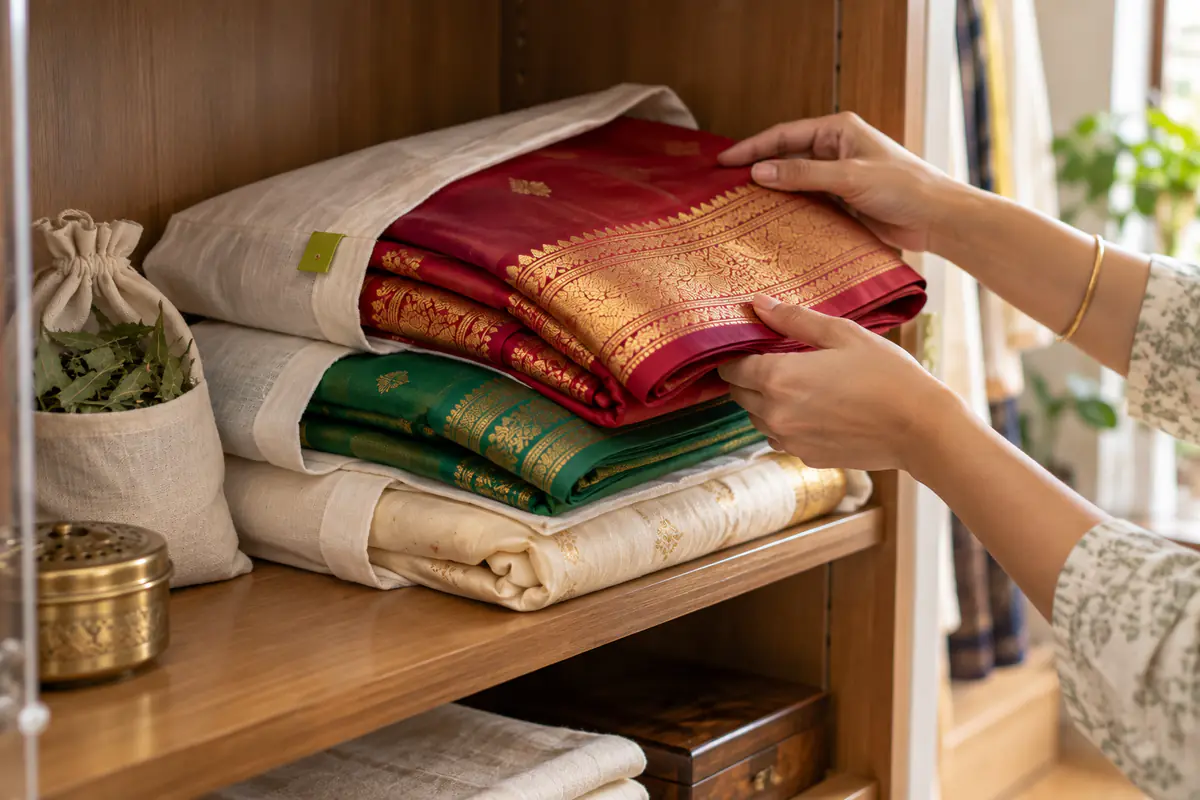
- Wrap silk and zari sarees in muslin or unbleached cotton, never plastic. The cloth lets the fabric breathe and keeps dust off. A clean old cotton saree or pillow cover works.
- Refold every three months along different lines, so no crease sets and no zari cracks. Fold zari sarees with the zari inside, pallu on top.
- Keep silk out of direct light and away from wood that has not been lined; both discolour it. Line wooden shelves with paper or cloth.
- Naphthalene balls or camphor go in a cloth pouch in a corner of the shelf, never touching the saree; direct contact stains silk. Dried neem leaves in a pouch do the same job more gently.
- Heavy sarees lie flat on the shelf, lightest on top. Hanging a silk or an embellished saree for months stretches the weave under its own weight.
- Air the cupboard once a month, especially between July and September. A saree that smells musty should come to us before the smell becomes a stain.
Wedding and bridal sarees
A wedding saree collects more in one day than most sarees do in a decade: haldi, food, sweat, perfume, mehendi from every hand that touched it, and a hem that has crossed a lawn. It should come to us within a few days, before anything sets, with a note of what happened where. Heavily worked bridal pieces are priced on inspection, because the embroidery, lining and stain treatment decide the work; a plain silk saree is ₹230 and a lehenga ₹1,000 at Laxmi Nagar. It comes back cleaned, hand pressed and folded with tissue, ready for the muslin wrap and the shelf described above. Do not seal it in the box it came in; the box is for the shop, not the cupboard. Lehengas, dupattas and the rest of the wedding wardrobe are covered in our lehenga and wedding outfit care guide.
What saree care costs
| Item | Service | Laxmi Nagar price | Turnaround |
|---|---|---|---|
| Saree, silk / embellished / synthetic | Dry cleaning | ₹230 | 72 hours |
| Blouse | Dry cleaning | ₹60 | 72 hours |
| Saree | Steam pressing only | ₹60 | 24 hours |
| Dupatta | Dry cleaning / steam pressing | ₹100 / ₹30 | 72 / 24 hours |
| Shawl, pashmina | Dry cleaning | ₹300 / ₹600 | 72 hours |
| Lehenga | Dry cleaning | ₹1,000 | 72 hours |
| Cotton sarees | Wash & fold, by the kilo | ₹70 per kg | 48 hours |
| Cotton and linen sarees | Premium laundry, by the kilo | ₹175 per kg | 48 hours |
Bridal and heavily worked pieces are priced on inspection. Express service is available at about twice the standard rate, confirmed before we take the garment. Full lists on the dry cleaning and price list pages.
A saree calendar for Delhi
Before the wedding season (September and October)
Take every silk saree off the shelf, check the fold lines and the zari, press out the creases and send anything with a stain or a musty smell now, while the counters are quiet. Refold the rest along new lines.
After every function
Air the saree overnight on a broad hanger, away from sun. Then send it, with the blouse, within a few days. Perfume and sweat do not show, but they set.
Before the monsoon (June)
Move silk to the driest shelf, check the muslin wraps, replace the neem or camphor pouches, and do not leave a plastic cover on anything. Cotton sarees can stay in rotation; wash and dry them fully the same day.
Winter
Heavier silks and Tussar come out; press before draping, never store with the woollen shawl that went over them, and keep sarees and pashminas in separate wraps so a moth in one does not find the other.
Saree care: your questions answered
Can a silk saree be washed at home?
It is not worth the risk. Silk loses strength when wet, its dyes bleed, water leaves rings and zari tarnishes. Plain silks sometimes survive a cold hand wash, but a Kanjeevaram, Banarasi or any saree with zari, a contrast border or embroidery should be dry cleaned. At ClanClean Laxmi Nagar a saree clean is ₹230 after the standard discount; prices may vary, so confirm with the outlet.
How do I wash a cotton saree without fading it?
Cold water, a mild liquid detergent, no bar soap and no bleach. Soak the first wash in salt water on its own because handloom colours bleed. Never wring; lift it out in a bundle and dry in the shade with the pallu away from the sun. Sun and hot water are what fade cotton sarees.
How often should a saree be dry cleaned?
After every occasion it is worn to, even if it looks clean. Sweat, perfume and food set invisibly over months in a cupboard and attract insects. A saree that has only been draped for an hour and not sweated in can be aired and refolded instead.
How should silk sarees be stored?
Cleaned, wrapped in muslin or unbleached cotton, never plastic, lying flat on a lined shelf out of direct light. Refold every three months along different lines so the zari does not crack on the fold. Keep naphthalene or camphor in a pouch that does not touch the fabric.
Why does the zari on my saree look black?
Zari is thread wrapped in metal, and it tarnishes with moisture, sweat and time, especially on the fold lines where it sits under pressure. Water and detergent speed it up, which is why zari sarees are dry cleaned. Tarnish can sometimes be brightened professionally; it cannot be reversed at home.
How do I remove a stain from a silk saree?
Blot it with a dry white cloth and do nothing else. Water spreads the stain into a ring, and household remedies strip the dye. Send the saree within a day or two, saying what the stain is; it is treated by hand on a spotting board before the clean. Turmeric on silk and mehendi are the two stains nobody can promise to remove.
Can I iron a silk saree?
Yes, inside out, on a low setting, with a thin cotton cloth between the iron and the silk, and no steam on the zari. Press along the length in long strokes, border and pallu first. Steam pressing a saree at ClanClean Laxmi Nagar is ₹60 and comes back in 24 hours.
How much does saree dry cleaning cost in Delhi?
At ClanClean Laxmi Nagar a saree is ₹230 and a blouse ₹60 after the standard 20% discount, with a 72-hour turnaround. A dupatta is ₹100, a lehenga ₹1,000 and heavily worked bridal pieces are priced on inspection. Prices may vary, so confirm the current rate with the outlet before booking.
What should I do with a wedding saree after the wedding?
Send it for dry cleaning within a few days, with the blouse, before haldi, food, sweat and mehendi set. It comes back cleaned, pressed and folded with tissue. Store it wrapped in muslin on a flat, lined shelf, not sealed in the shop box or plastic, and refold it every few months.
Is a georgette or chiffon saree dry clean only?
Silk georgette and chiffon are. Synthetic georgette and chiffon survive a gentle cold hand wash with liquid detergent, dried flat or over two lines so they do not stretch, but anything with embroidery, sequins or a heavy border should be dry cleaned regardless of the base fabric.
Send the sarees, keep the Sunday
Free doorstep pickup across East and South Delhi. Tell the rider which pieces are silk, which are cotton and where the stains are, and our front desk sorts the rest — dry clean, press or wash. Free pickup and delivery on orders over ₹500, and 20% off every order.
Where we pick up and deliver
Every order is collected, cleaned and returned by one of our three shops: Laxmi Nagar in East Delhi, and Malviya Nagar and Sarvapriya Vihar in South Delhi. There is nothing to drop off — the rider comes to your door.
South Delhi pickup areas: Saket, Hauz Khas, Green Park, Greater Kailash 1, Greater Kailash 2, Defence Colony, Lajpat Nagar, CR Park, South Extension, Sarojini Nagar, Panchsheel Park, Mehrauli.
East Delhi pickup areas: Mayur Vihar Phase 1, Patparganj, Karkardooma, IP Extension. Each shop’s page lists every locality it covers.